
In this article
Saudi Arabia and the UAE together account for more new hotel openings per capita than any other region globally. Saudi Vision 2030 alone has 300,000+ new hotel rooms in the development pipeline. Behind every one of those rooms is a procurement officer hunting for the same thing: high-GSM, white, durable hotel towels at predictable monthly volume.
This guide is for that procurement officer.
What Gulf Buyers Are Searching For
Google search trends across .sa and .ae domains show a tight cluster of high-intent queries:
- "towel suppliers Saudi Arabia"
- "hotel towels Dubai wholesale"
- "bath towel importers UAE"
- "linen supplier hotel Riyadh" / "...Jeddah" / "...Makkah"
Search volume spikes 60–90 days before Hajj and Umrah season every year - a procurement signal Indian manufacturers track closely.
The Two Procurement Cycles That Drive Gulf Demand
1. Hajj & Umrah cycle (Makkah / Madinah hotels)
Replenishment volumes are massive and predictable: 2.5 million Hajj pilgrims plus year-round Umrah traffic mean Makkah's hotel cluster cycles through tens of millions of towels annually. Buyers in this segment prioritize durability over luxury - 500–600 GSM, reactive-dyed white, double-stitched hem.
2. Vision 2030 / new-hotel openings
NEOM, Red Sea Global, AlUla, and the Diriyah projects are commissioning hotels under international brands (Marriott, Accor, IHG). These openings procure to brand-standard specifications, which means 700+ GSM Egyptian or Pima-blend combed cotton, often with embroidered branding.
Compliance Requirements for Gulf Imports
Saudi Arabia (SASO):
- SABER registration is required for textile imports as of 2024
- Conformity certificate via a SASO-approved CB (TUV, SGS, Intertek)
- Arabic-language care labels mandatory
UAE (ESMA / MoIAT):
- ECAS conformity certificate for textile imports
- Care labels in English and Arabic
- Imports via Jebel Ali Free Zone benefit from re-export advantages for GCC distribution
A good Indian exporter handles SABER and ECAS registration in-house or via a freight forwarder partner; ask this question early in the RFQ.
Landed Cost: India to Gulf
The geography works strongly in India's favor. From Mundra (Gujarat) or Cochin (Kerala) to Jebel Ali is 5–8 days transit. Indicative for 600 GSM bath towels, MOQ 5,000:
I import into
India
Anabyn ships from here0 percent in the UAE; 5 percent elsewhere in the GCC
UK, GCC and Australian buyers, hotel and private label programmes that want several towel types on one order, and anyone starting with a trial run.
China
5 percent
Printed, velour and microfibre towels, promotional programmes, and buyers outside the US who need very large volumes fast.
Pakistan
5 percent
EU buyers of standard white hotel and institutional terry in container volumes, where the 0 percent GSP plus duty decides the price.
Türkiye
UAE Türkiye CEPA cuts many lines; 5 percent elsewhere
European retailers and boutique hotels who value short lead times, design and the Turkish cotton story over unit price.
Bangladesh
5 percent
EU and UK buyers who already source garments in Bangladesh and want to add simple towels to the same supply base.
The GCC applies a 5 percent common external tariff. The India UAE CEPA has been in force since May 2022 and needs a CEPA certificate of origin.
Duty on cotton terry towels, HS 6302.60, as of October 2026. Bed linen and robes often follow the same pattern, but check your own line in the duty calculator. Source: UAE CEPA guide.
- FOB Indian port: USD 3.10 – 3.60 / piece
- Ocean freight Mundra → Jebel Ali: ~USD 0.08 / piece
- UAE duty (5% CIF for textiles): included
- Inland Jebel Ali → Dubai / Abu Dhabi: negligible
Landed cost in UAE: ~USD 3.40 – 3.90 / piece, against Turkish equivalents at USD 4.50–5.00.
Why India Wins the Gulf Market
1. Shipping distance: Mumbai-Jebel Ali beats Izmir-Jebel Ali on transit time.
Days at sea from Cochin or Vizhinjam. Some markets list two coasts or ports, so the bar shows the full range. Tap a market for its guide.
2. CEPA (India-UAE Comprehensive Economic Partnership Agreement): Reduced tariffs on textile categories.
3. Cultural alignment: Indian factories supply Arabic care-label printing and Friday/Saturday-aligned delivery windows as standard.
4. Volume capacity: Indian mills can absorb 100,000-piece monthly orders without lead-time slippage.
What to Specify in Your Gulf RFQ
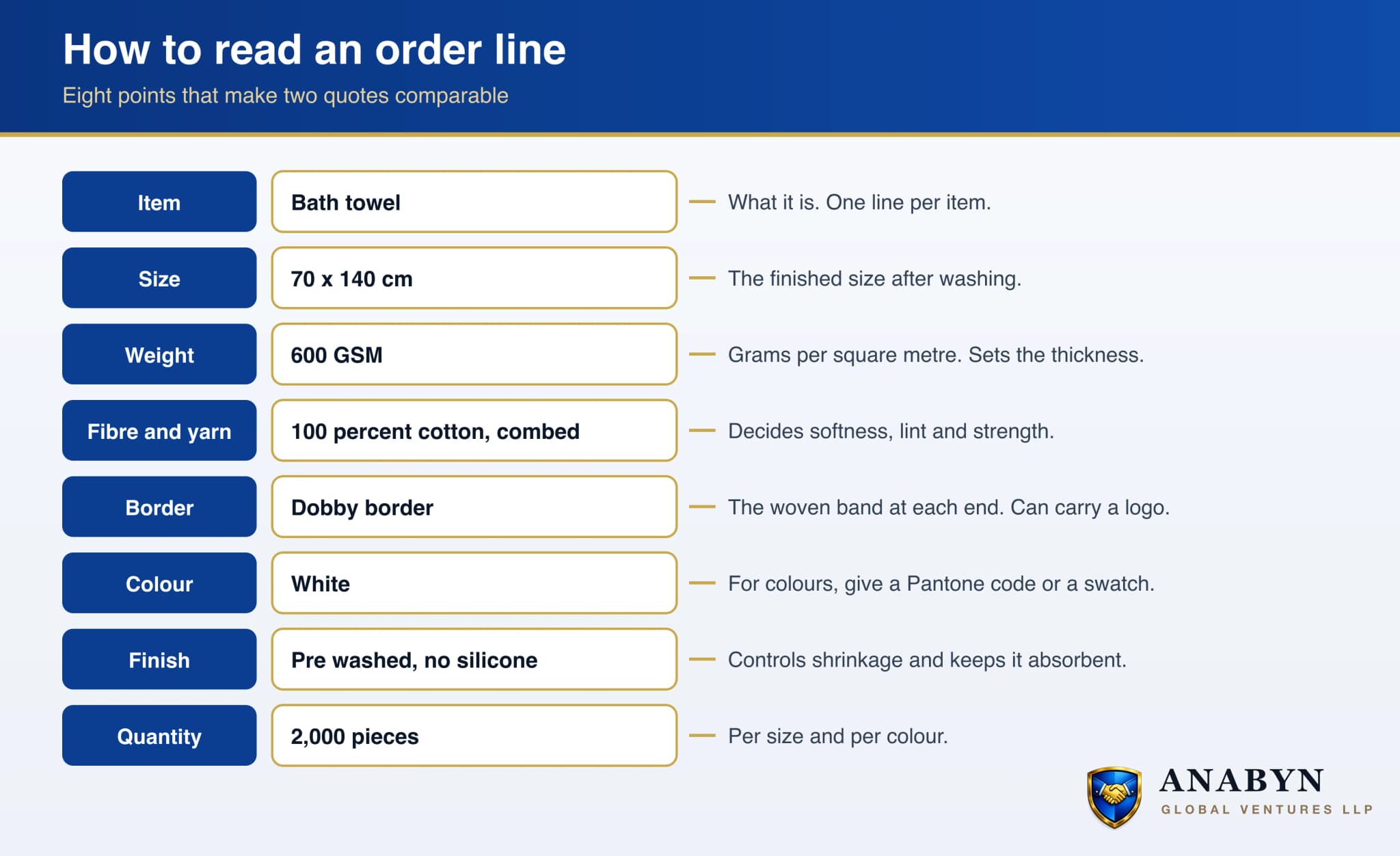
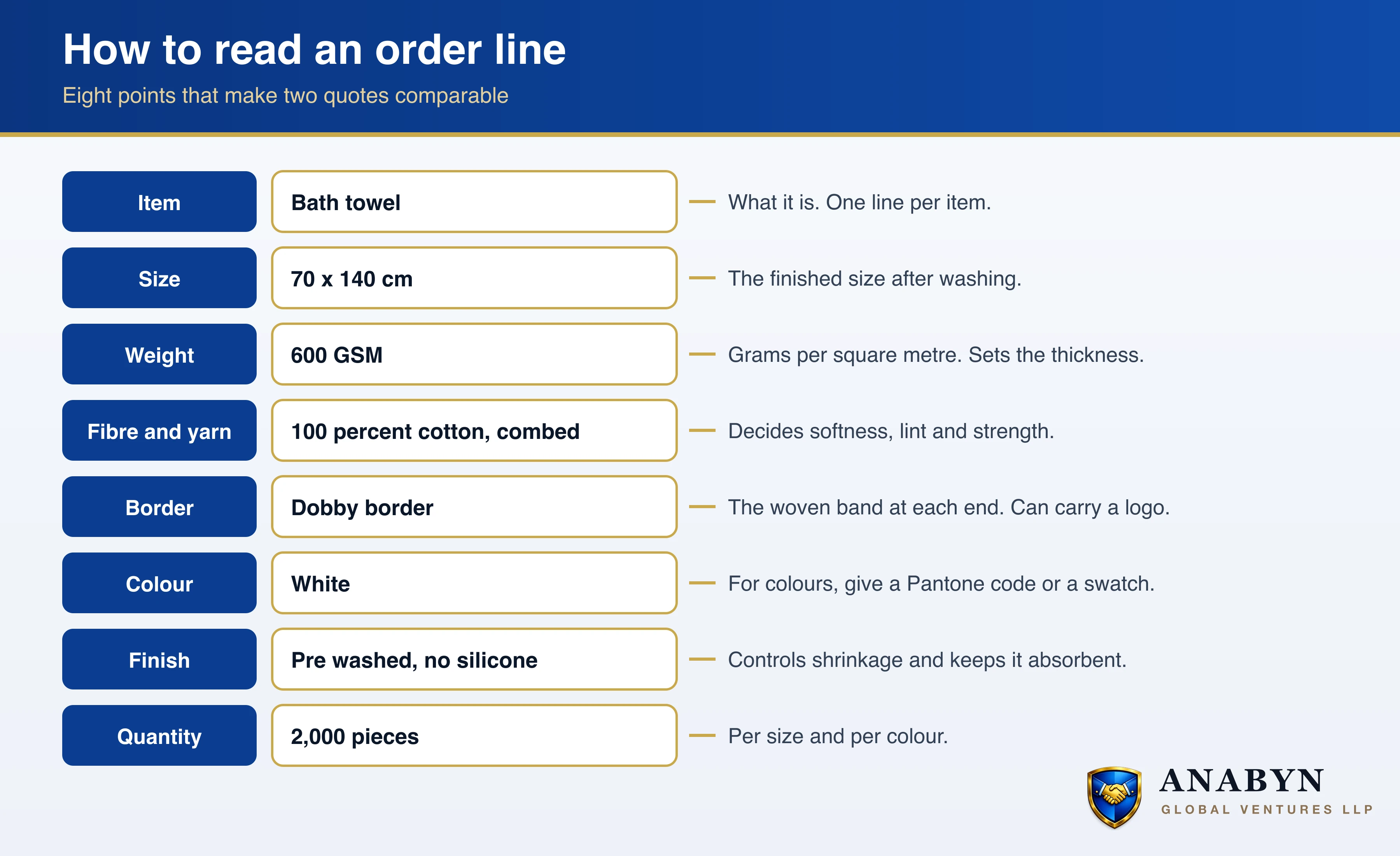
- GSM (600 for Makkah hospitality, 700+ for luxury new-builds)
- Color (hotel white = reactive dye, never pigment dye - pigment fades in chlorine-heavy Gulf water)
- Logo embroidery details (Arabic + English)
- SABER / ECAS handling responsibility
- Delivery window relative to Hajj / Ramadan / event calendar
 Enlarge
Conclusion
The Gulf hospitality market in 2026 is the single biggest growth opportunity in global hotel textile procurement. Indian manufacturers with SABER experience and CEPA-eligible shipping routes are positioned to capture the bulk of it.
Building a Hajj 2027 procurement plan or fitting out a Vision 2030 property? Request a Gulf-specific quote from Anabyn - we'll include SABER/ECAS handling in the technical dossier.
Share this article
Want pricing on what you just read?
Leave your work email — our export desk replies with specs, MOQ and a quote within 1 business day.

Written by
Dr Abin Babu
Founder & Chairman, Anabyn Global Ventures
Anabyn exports hotel and home linen from Kerala, India. These guides come from the questions buyers ask our desk. About the team
Ready to Order?
Send us your specification. We reply within one business day and send a priced quote within 48 hours.
Request an Export QuoteWhere to go next