
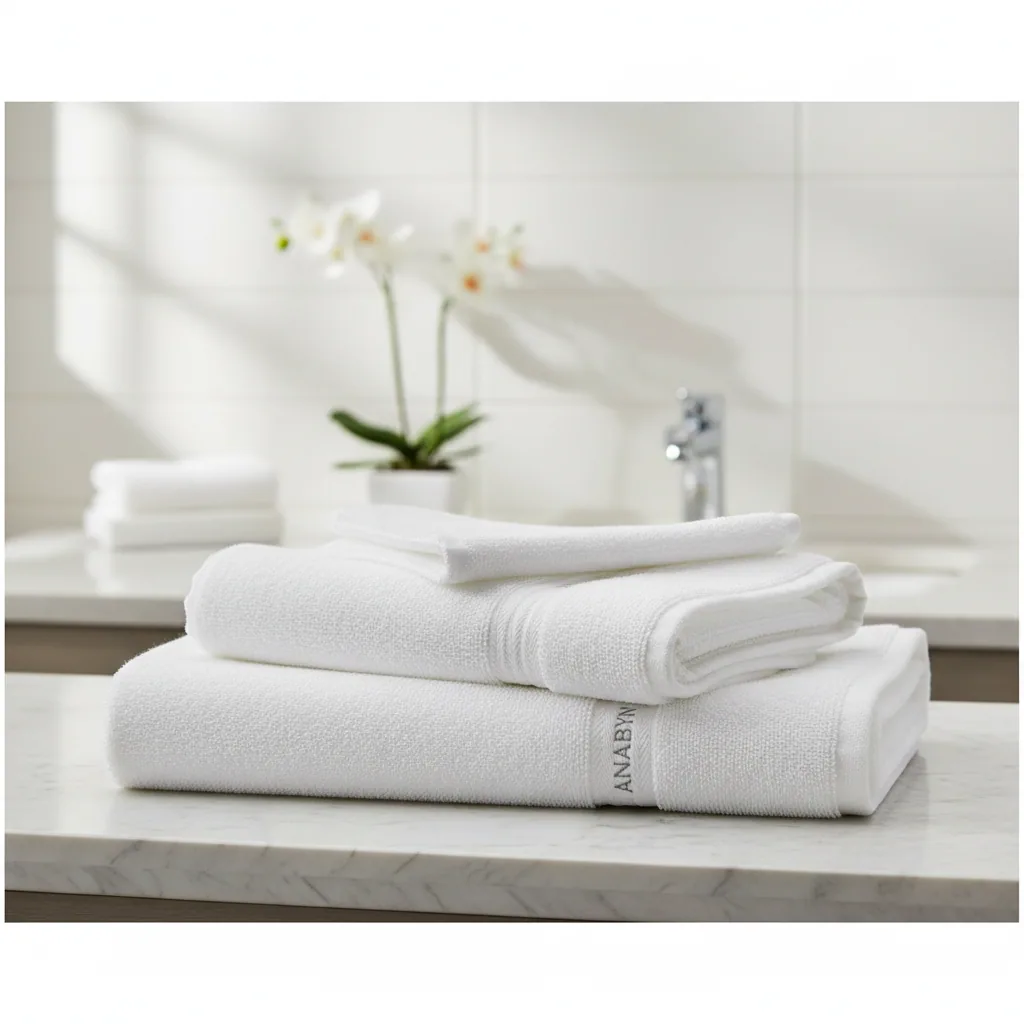
Why GSM Matters More Than Price When Buying Hotel Towels
Every hotel procurement manager has made the same mistake at least once: they bought a "cheaper" towel that lasted 30% fewer cycles and ended up costing 40% more per cycle over its usable life. The root cause is almost always a GSM mismatch - buying a lower GSM towel because it had a lower unit price.
The Cost Per Cycle Formula
The correct metric for comparing hotel towels is cost per usable wash cycle:
Cost per cycle = (Unit cost + freight + replacement cost allocation) ÷ expected wash cycles
A 400 GSM towel at $2.80 may last 350 cycles. A 550 GSM towel at $4.50 may last 600 cycles. The math:
The "cheaper" towel costs more per cycle.
How GSM Affects Towel Longevity
GSM (Grams Per Square Metre) is the single strongest predictor of towel lifespan. More cotton pile per square metre means:
A 400 GSM towel has approximately 30% less cotton mass than a 550 GSM towel of the same dimensions. Under commercial laundry conditions (60°C wash, high-G-force extraction, tumble drying), that cotton mass directly translates to cycle durability.
What GSM to Specify by Property Type
How to Specify Correctly
When issuing an RFQ for hotel towels, specify:
1. GSM with tolerance: e.g., 550 GSM ±3%
2. Yarn type: Ring-spun combed cotton
3. Material: 100% cotton (no polyester blend)
4. Colour fastness: ISO 105-C06 minimum Grade 4
5. Shrinkage: ≤5% post-wash per ISO 6330
6. AQL standard: AQL 2.5 pre-shipment inspection
For FOB pricing by GSM tier from India, request a benchmark quote from Anabyn.
Share this article

Author Bio
Dr Abin Babu
Published by the Anabyn Export Intelligence Team - dedicated to providing technical clarity and compliance guidance for global textile procurement.
Ready to Order?
Discuss your technical specifications with our sourcing desk. We provide comprehensive export proposals within 24 hours.
Request an Export QuoteWhere to go next