
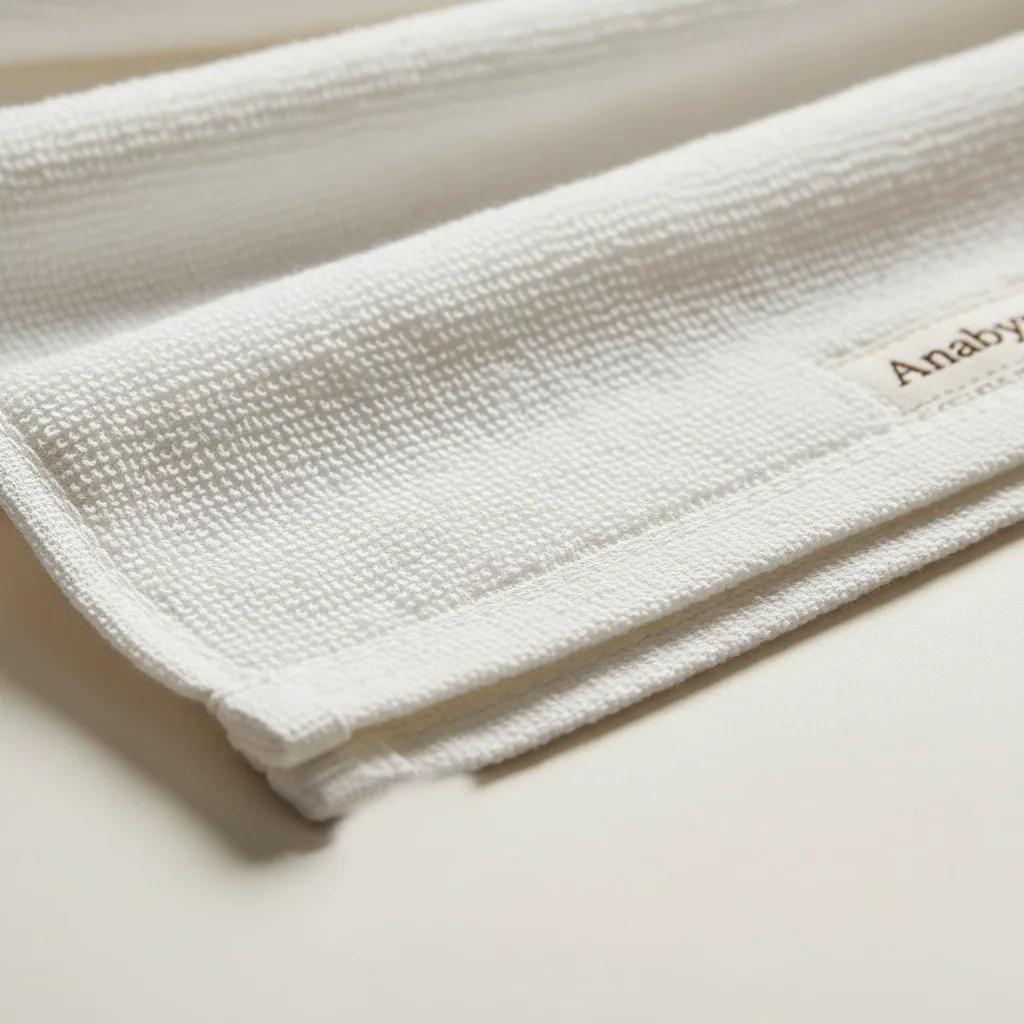
Why India Leads Global Terry Towel Manufacturing
India is the world's second-largest exporter of terry towels, accounting for over 18% of global terry fabric exports by volume. Cities like Solapur (Maharashtra) and Karur (Tamil Nadu) have built multi-generational expertise in terry weaving that no other country has replicated at scale.
The competitive advantage is structural, not just price-based:
For international buyers, this means shorter lead times, better QC visibility, and a wider specification range than most competing origins.
Step 1: Raw Material Selection (Cotton Types - Combed, Ring-Spun, Zero-Twist)
The quality of a terry towel is determined before the first yarn is spun. Indian manufacturers source three primary cotton grades for export production:
**Combed cotton** is the standard for mid-range hospitality towels (400–550 GSM). The combing process removes short fibres and impurities, producing a cleaner, stronger yarn with less pilling over wash cycles. Most 3–4 star hotel towels are made from combed cotton.
**Ring-spun cotton** goes a step further - fibres are twisted tightly during spinning, creating a denser, smoother yarn. Ring-spun towels have a noticeably softer hand-feel and higher tensile strength, making them the preferred choice for 5-star hotel procurement specifications.
**Zero-twist cotton** uses a water-soluble yarn to hold fibres together during weaving, which is then dissolved in finishing. The result is an ultra-soft, highly absorbent loop structure. Zero-twist towels are typically 600+ GSM and command a premium in luxury spa and boutique hotel supply chains.
Reputable exporters like terry towel exporters from India will provide fibre test certificates confirming cotton grade, staple length, and micronaire value upon request.
Step 2: Yarn Spinning and Preparation
Once raw cotton is selected and ginned, it moves through the blow room (cleaning), carding (fibre alignment), and drawing (blending) stages before arriving at the spinning frame.
For terry towels, yarn counts typically range from Ne 16s to Ne 30s for pile yarn, and Ne 20s to Ne 40s for ground yarn. Finer counts (higher Ne) produce softer, lighter towels; coarser counts produce heavier, more absorbent ones.
Indian spinning mills operate both open-end (rotor) and ring-spinning systems. For export-grade terry towels, ring-spinning is the industry standard - it produces a stronger, more uniform yarn with better dye uptake.
After spinning, yarn is wound onto cones, waxed for loom feeding, and stored under humidity-controlled conditions (60–65% RH) to prevent breakages during weaving.
Step 3: Terry Weaving on Rapier Looms
Terry weaving is technically complex. Unlike flat woven fabrics, terry towels have three-dimensional loops created by a controlled slack-tension weaving technique - the pile yarn is fed at a different rate to the ground yarn, forming the characteristic loops on one or both sides.
Indian manufacturers predominantly use **rapier looms** (Picanol, Dornier, and Sulzer brands) for export production. Rapier looms allow precise pile height control, enabling manufacturers to produce towels from 300 GSM bath mats to 650 GSM luxury spa robes on the same machine with minimal changeover.
Key weaving parameters that affect the final product:
Step 4: Dyeing, Bleaching & Finishing
After grey fabric leaves the loom, it enters the wet processing sequence:
**Scouring and desizing** removes natural waxes and any weaving aids from the yarn. This is a critical step - residual sizing compounds reduce absorbency in the finished towel.
**Bleaching** whitens the natural cotton colour using hydrogen peroxide (eco-preferred) or chlorine-based processes. Responsible exporters use peroxide bleaching exclusively and can provide wash-fastness data to confirm no residual chlorine.
**Dyeing** - for coloured towels, reactive dyes are the industry standard for cotton. They form covalent bonds with cotton fibres, giving wash-fastness ratings of 4–5 (ISO 105-C06). GOTS certified facilities restrict the dye palette to approved colorants only.
**Finishing** includes softening (to improve hand-feel), tumble drying (to open the pile loops), and calendering (for borders and labels). The finishing stage has the biggest impact on the initial customer experience of the towel.
Step 5: Quality Control & GSM Testing
Export-quality manufacturing requires inline QC at every stage, not just a final inspection. The key checkpoints are:
**GSM verification** - using a GSM cutter and precision scale per ASTM D3776. Towels must fall within ±5% of the specified GSM. A 500 GSM towel must test between 475–525 GSM per carton.
**Colorfastness testing** - ISO 105-C06 (wash), ISO 105-B02 (light), and ISO 105-X12 (rubbing) are the standard suite. Most buyers require a minimum rating of 4 on the grey scale.
**Dimensional stability / shrinkage** - tested to ISO 6330 after 3 wash cycles at 60°C. Acceptable limits: ≤5% for terry towels in both warp and weft.
**AQL inspection** - final shipment inspection is conducted to AQL 2.5 (Level II), meaning in a 5,000-piece order, 200 pieces are inspected with a maximum of 10 defects permitted before the shipment is rejected.
Third-party inspection by SGS, Bureau Veritas, or Intertek is available for buyers who require independent verification.
Step 6: Packing & Export Documentation
The final stage before shipment involves precise packing to protect goods during ocean transit (typically 25–35 days to Europe or the USA).
**Standard packing for hotel towels:**
**Export documentation provided with every Anabyn shipment:**
Lead time from order confirmation to loading: 30–45 days for standard specifications, 20–30 days for repeat orders with approved samples on file.
FAQ
What is the minimum order quantity (MOQ) for terry towels from India?
Most Indian terry towel manufacturers set MOQ at 500–1,000 pieces per design/colour combination. At Anabyn, our standard MOQ is 500 pieces per SKU, with combined orders across multiple SKUs welcome from 2,000 pieces total.
How long does it take to receive towels from India?
From order confirmation: production takes 30–45 days for new orders. Ocean transit adds 18–28 days to Europe, 22–32 days to the US East Coast, and 12–18 days to the UAE. Air freight is available for urgent sample and trial orders.
What certifications should I ask for when buying towels from India?
For retail and hospitality buyers, the key certifications are OEKO-TEX Standard 100 (no harmful substances), GOTS (organic cotton chain of custody), and ISO 9001 (quality management). For the US market, also confirm fibre content labelling compliance with the FTC Textile Act.
Can Indian manufacturers produce custom GSM, sizes, and branding?
Yes. Indian terry towel manufacturers routinely produce custom GSM (from 300 to 700+), custom sizes, woven borders, jacquard logos, embroidered branding, and private label packaging. Technical specifications should be submitted via a formal RFQ with your target GSM, dimensions, composition, and colorfastness requirements.
---
*Sourcing certified towels starts with the right certifications. See Anabyn's GOTS, Oeko-Tex & ISO certifications. For everything a first-time importer needs to know, read the complete guide to terry towel exports from India.*
Share this article

Author Bio
Dr Abin Babu
Published by the Anabyn Export Intelligence Team - dedicated to providing technical clarity and compliance guidance for global textile procurement.
Ready to Order?
Discuss your technical specifications with our sourcing desk. We provide comprehensive export proposals within 24 hours.
Request an Export Quote